The Critical Foot-Brain Connection
A Guide to Natural Gait Mechanics and Therapeutic Foot Care
Lesson 4 – Treatment Methods
If the video player does not load, please ensure your browser allows embedded video.
Downloads: Lesson 4 Course Book / Monograph
Palliative Treatment Methods
(For more detailed coverage of this topic, refer to The Future of Foot Care Monograph, pages 44-52.)
Examples of the least effective (in the long term) attempts to relieve presenting symptoms are the following (strictly palliative) means:
- Electrotherapy
- Compression wrap and braces
- Heat
- Ice
- Oral anti-inflammatories and analgesics
- Topical creams, ointments, and rubs
Therapeutic Treatment Methods
Therapeutic treatment methods, while a step up in the pursuit of symptom relief, often still do not alleviate the underlying causes of pathology. The following is a list of common therapeutic treatment methods:
- Acupuncture
- Chiropractic manipulation
- Corticosteroid injection
- Deep tissue massage
- Hands- on soft tissue mobilization
- Instrument assisted soft tissue mobilization
- Laser treatment
- Shockwave therapy
- Therapeutic ultrasound
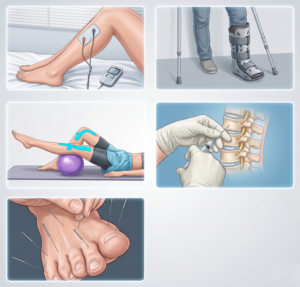
Figure 4.1. Common treatment methods.
Surgery
Perhaps the most aggressive treatment method for relieving symptoms is surgery to remove or alter the structures or tissues from which pain is emanating. It may be argued that, in the long term, this is the worst option of all because it alters essentially normal anatomy, potentially reducing the possibility of future, optimal rehabilitation.
All treatment methods will result in some symptomatic relief and, perhaps, even complete relief. However, without addressing the actual cause of the underlying maladaptive neuromusculoskeletal mechanics of a pathology, the ultimate long-term net outcome of any of these treatment methods will be future pain, suffering, degeneration, and ever-diminishing functional capacity.
Common Gait-Related Treatment Methods
The most co mmo n treatments for the host of pathologies that result from poor foot biomechanics focus on cushioning, supporting, or bracing the foot and ankle – often in combination. While exercise and rehabilitation programs are sometimes recommended, the focus is usually on the toe flexors as opposed to the toe extensors and compliance is usually poor.
Cushioning
Cushioning treatment options include foam, gel, and felt-based insole products, and footwear that incorporates cushioning midsoles. Cushioning often presents a “comfortable” feeling initially, but it provides a false sense of security by offering benefits that are superficial at best. In reality, cushioning spreads the ground contact forces to the sole of the foot over a wider surface area and optimal subtle varied stimulus becomes attenuated uniform stimulus.
Cushioning products are purported to dissipate the vertical shock that results from chronic overloading, thereby reducing the stress to the foot. Contrary to common perceptions, cushioning products mitigate vertical shock by less than 10%, at best. Unfortunately, studies show that horizontal forces – rather than vertical forces – contribute most significantly to foot pathologies. Research demonstrates that the control of initial pronation is of greater importance than shock absorption. Studies indicate that cushioning the foot isolates the plantar surface from the sensory feedback it requires to induce its protective adaptations – essential for effectively managing the forces generated at impact. It has been demonstrated, in vivo, that impact remains unchanged whether the runner uses soft running shoes, hard running shoes, or is barefoot (without a barefoot adaptation period).
Long-term use of cushioning products results in lower limb maladaptations – the loss of the neuromuscular system’s functional robustness.
Supportive Orthotics (Bracing)
Custom orthotics and similar products attempt to stabilize the subtalar joint by supporting the arch, claiming to “correct” the poor biomechanics of the foot. This claim of correction is misleading. In reality, orthotics by their very nature, spread the ground contact forces to the sole of the foot over a wider surface area – optimal subtle varied stimulus becomes attenuated uniform stimulus.
Subtalar neutral position (the mechanical relationship between the talus and navicular) is often thought of as the key to proper structural alignment in the foot. Contrary to the conventional view, this mechanical relationship is dynamic in nature rather than static; that is, the relative positioning of the subtalar joint is determined by the nociceptive and proprioceptive reflex muscle activations (or lack thereof) in response to activity levels and terrain.
All too often, excessive pronation is incorrectly identified as the cause of these problems, when it has been demonstrated herein to be merely a clinical sign of inefficient nociceptive and proprioceptive reflex muscle activity. Orthotics mask these neuromuscular inefficiencies by artificially supporting or bracing the dysfunctional structure (or the structure that is exhibiting poor bone alignment) along with its inherent muscle imbalances, by simply introducing a new angle of ground interface to the foot.
In addition, by artificially supporting the foot, the orthotic manages the vertical loads in place of the arch system. As a result, over the long term, the arch system of the foot and the neuromuscular mechanics of the lower limb remodel in response, leading to a weakened structure and an increased dependency on the artificial support.
Exercise (Rehabilitation)
Exercise as a means of rehabilitation is a co mmo n therapy throughout musculoskeletal medicine. In fact, exercise, where appropriate, is usually the first treatment of choice, prior to more radical options, such as surgery. Many orthopaedic surgeons recommend a regimen of exercise, both before and after surgery, as a means to speed recovery times. Mobility braces are commonly used after reconstructive ligament surgeries (i.e., at the knee) to reduce scar tissue formation and maintain mobility at the joint.
The most commonly recommended exercises for foot pathologies focus on rolling a ball or cylinder with the sole of the foot, plantarflexing the toes, or using them to grasp an object. These exercises may provide some benefit, but the muscular sequences involved have very little relevance to gait mechanics.
The most beneficial foot exercise would involve multidirectional barefoot activity on diversified terrain to enhance neuromuscular function and develop a balance of strength and flexibility throughout the lower limbs, hips, and back. However, this type of activity is impractical for most individuals.
Regardless of the exercises involved, the amount of time spent to achieve some positive benefit would be in direct proportion to the amount of time the person wore restrictive footwear. While exercise is promising for most individuals, it is limited by time constraints; hence, the typically poor compliance.
Biopods® / Barefoot Science® Technologies and Related Complementary Treatment Modalities: The New Gait-Related Paradigm
(For more detailed coverage of this topic, refer to The Future of Foot Care monograph, pages 52-85.)
The revolutionary premise of “foot rehabilitation” – capable of restoring an individual’s maladapted neuromuscular gait mechanics (as found in the shod community) to optimally align and muscularly control gait mechanics (as found in the traditionally unshod community) – is the mission of Biopods / Barefoot Science technologies.
To that end, Biopods, has developed patented technologies, which are incorporated into Biopods / Barefoot Science insole and footwear products. Biopods / Barefoot Science insole products create the “Right Stimulus” and in addition their footwear facilitates the “Right Movement” required for healthy barefoot-like (protective) neuromuscular response throughout the lower limbs, hips and back. This protective reflex response triggers the Windlass and Cuboid Pulley Effect mechanisms that are fundamental to the formation of a strong stable dome- like arch system. This dome- like arch system is the foundation for the safe and efficient lower limb kinetic chain “Right Movement.”
Clinical Concepts and Modalities
1. Footwear design features that affect optimal foot mechanics
- Inner sole cushioning, for ‘user comfort’:
- Dampens any possible stimulus to tactile, mechanoreceptive, proprioceptive, and pressure sensory input that would positively influence (i.e., stimulate) proper neuromusculoskeletal alignment of the foot.
- Has been shown mathematically to create a net increase in the rate and severity of injury-causing forces experienced by the foot during weight bearing and propulsion.
- Provides no ‘useful’ sensory input for central processing, and, perhaps worse.
- ‘Insulates’ the nerves of the foot from detecting useful stimuli external to the shoe, via which optimal protective reflexes would otherwise be initiated, toward the creation of ideal foot alignment.
SOLUTION… footwear design that incorporates an inner sole with such an ideal firmness that it acts as an inert, neutral platform that provides the optimal metatarsal head-to-inner sole interface for maximally efficient propulsion. Introduce a ‘variable’ stimulus into the inner sole that will mimic the stimulus received by an unshod foot while walking on natural terrain.
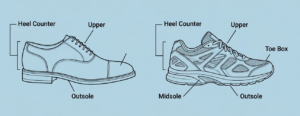
Figure 4.2. Footwear design characteristics.
2. Rigid outsoles constructed of hard and/ or excessively thick materials:
- Inhibit an efficient toe-off during propulsion via their rigidity.
- Attenuate varied ground contact stimulus.
- Inhibit the ideal sequence of adaptive heel-to-toe foot contact during the stance phase of gait.
- Create accelerated longitudinal heel contact to forefoot contact loading forces (i.e., “foot slap”) and accelerated medial to lateral/lateral to medial loading forces during ground contact. These accelerated forces can be up to 400% greater than those experienced when barefoot. These increased forces create unnecessary strain and significantly increase the likelihood of injury.
SOLUTION… footwear design that incorporates soles capable of bending freely in every transverse plane, and that allow torsional positioning of the foot as it reacts to the stimulus of the previous stance phase
3. Hard rigid materials enclosing the toe boxes:
- Prevent the adequate hallux extension necessary for the ‘Windlass Effect’ to have been effectively stimulated before heel strike, beginning the stance phase of gait.
- Prevent the adequate hallux extension necessary for ideal first ray configuration, thus hampering an efficient, linear toe-off for propulsion.
- Prevent the adequate hallux extension needed for the sesamoid bones to glide distal to the 1st metatarsal head point of ground contact. This is necessary for the ‘locking-in-place’ of the Windlass Effect required for the stability and alignment needed for optimal propulsion.
SOLUTION… footwear design that incorporates soft, non- restrictive materials above all the toes, but in particular, above the hallux.
4. Narrow “pointy” toe boxes:
- Compress all the metatarsal heads toward the foot’s central axis, shifting the ideal vector of propulsion away from the first ray, diminishing the efficiency of propulsion and increasing tissue stress that can contribute to tissue injury.
- Prevent the adequate hallux extension needed for the sesamoid bones to glide distal to the hallux point of ground contact, necessary for the ‘locking-in-place’ of the Windlass Effect needed for optimal stability and alignment that create ideal propulsion, and minimizes the potential for tissue stress and injury.
SOLUTION… footwear design that incorporates a wide, roomy, deep toe box region.
Widely flared heels (intended to ‘stabilize’ the foot at heel strike):
- Prevent, or at least, inhibit the capacity of the calcaneus to roll, at heel contact, which is needed to most correctly react to the encountered terrain as sensed at the previous stance phase.
- Create a pivot point, other than at the center of mass of the calcaneus, that creates an inappropriate lever arm, thus generating abnormal stress that increases the risk of tissue overload.
SOLUTION… footwear design that incorporates outsoles that have the plantar surface of the heel region curved convexly (without any medial or lateral ‘flare’) to most closely match the natural, convex curve of the calcaneus. This minimizes the length of the lever arm so that, at the point of ground contact, there is an efficient and easy adaptability to the muscle stimulation that resulted from the terrain and activity level sensed during the previous stance phase of gait.
Uppers constructed with excessively rigid materials:
- Prevent, or at least, inhibit torsional adaptive foot alignment relative to the stimulus received from the previous heel strike, regarding environment, terrain, and angles of activity.
- Prevent, or at least, inhibit the optimal skeletal alignment for the Windlass Effect and the glide of the sesamoid bones past the hallux point of ground contact, needed for optimal propulsion and minimized tissue stress.
- Prevent the peroneii muscles from efficiently exerting their ‘pulley-like’ effect through the Cuboid, thus inhibiting the formation of the ‘optimal arch apex’.
SOLUTION… footwear design that incorporates uppers constructed of materials with sufficient suppleness and malleability so as to not hinder any degree of motion or alignment adaptations the foot may require as it responds to the stimulus from the previous stance phase.
Excessive Heel Height:
- Creates a position of plantar flexion that, beyond a tolerable minimal amount, makes it difficult to achieve sufficient dorsiflexion during swing phase to effectively create the Windlass Effect, leading to an unstable foot alignment in stance phase.
- At the extreme (i.e., stilettos), causes the body’s center of gravity to shift, ankles to become overly plantar-flexed, and knees to become hyper-extended – which creates multiple regions of abnormal tissue strain.
SOLUTION… footwear design that incorporates minimal heel height
- Maximally flexible outersole, capable of considerable torsion and easy dorsiflexion (uniformly, throughout the entire forefoot).
- Uniformly firm and dense innersole.
- Rounded heel of minimal height.
- Deep, roomy, broadly shaped toebox.
- Supple uppers (materials and or construction).
These characteristics create an environment that optimizes “Right Movement,” as initiated by the “Right Stimulus” of the contralateral foot, during the pre-ground contact and ground contact phases of gait.
Soft tissue treatment options
- Arch Supports – as an attempt to passively create the ‘fallen’ or diminished foot arch – limits movement of the foot causing atrophy and weakening of the boney and soft tissues.
- Joint and Soft Tissue Manipulative treatment – is a form of manual treatment to influence joint and neurophysiological function, such as: improve joint biomechanics, improve joint neurological input and output, break up joint and soft tissue adhesions, reduce swelling with increased joint motion, etc.
- Cushioned Insoles – as a means to absorb forces, construed to be the cause of tissue symptoms – causes atrophy and weakening of the boney and soft tissues.
- Custom and Contoured Insoles – as an attempt to improve foot function with a presumed ideal, preconfigured shape – limits movement of the foot causing atrophy and weakening of the boney and soft tissues.
- Exercise Therapy – as an attempt to lengthen contractured muscles, restore contractility to and strengthen wasted muscles and otherwise mobilize all soft issues in a currently maladapted region.
- Heat Therapy – as an attempt to temporarily increase blood flow to the symptomatic region such that oxygen and healing nutrients can flood the damaged tissues.
- Ice Therapy – as an attempt to temporarily reduce blood flow to the symptomatic region as a means to diminish inflammation and swelling, also as an attempt to create a concurrent analgesic benefit.
- Immobilization – external braces, tensor wraps, and taping are used as a means to ‘stabilize’ the symptomatic areas – causes atrophy and weakening of the boney and soft tissues.
- Instrument assisted soft tissue mobilization – as an attempt to break down adhesions and scar tissue (via the application of an instrument and precise body movements and specific tension, applied to the problem tissue), in essence, to “free up” proper tissue motion, elasticity, and contractility of muscles, tendons, and ligaments.
- Medication – (i) as an attempt to prevent, or reduce, the inflammatory response produced by tissues that naturally occurs following trauma or concurrent to an RSI process; (ii) as an attempt to inhibit the brain’s perception of nociceptive input… in essence ‘masking’ the ongoing damaging process’ warning signal, potentially risking further damaging activity, unabated.
- Topical Ointments and Creams – a wide variety is available, as an attempt to offer ice benefits, heat benefits, healing compound benefits, and direct nutrient benefits
- Ultrasound, Shock-Wave, and Laser Therapies – as an attempt to eliminate the fibrotic build up and adhesions from symptomatic tissues; also as an attempt to stimulate/increase the rate of tissue healing.
Assessment protocols: How to identify those who will benefit from Biopods / Barefoot Science
Q: “Who will benefit from the use of Biopods / Barefoot Science products?”
A: “Everyone who walks on two feet and wears shoes.”
Clinical Indications of Maladapted Gait Mechanics
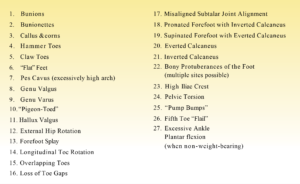
I. Visual Signs: [a.k.a.: (+) Foot Dysfunction Indicators (FDI)]
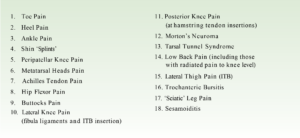
II. Non-traumatic Complaints of:
III. Recurrent Symptoms from Previous Trauma:
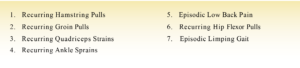
IV. Discovery by Palpation:
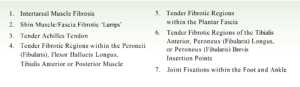
The presence, history, detection, or palpation of any of the above represents a positive indication for the use of Biopods / Barefoot Science products as a means to correct the maladaptive neuromusculoskeletal gait mechanics that are responsible for the development of each of these observations/findings.
V. Other Possibilities:
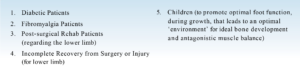
- Pain
- Degeneration
- Maladapted tissue
- Dysfunction
All due to a maladapted mechanical gait pattern (as the singular cause) – as found consistently in the shod community.
How to Select the Optimal Biopods / Barefoot Science Stimulus Intensity Level
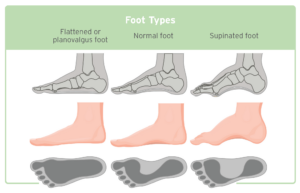
Figure 4.3. Three foot types. Each type can be regarded functionally as either rigid (difficult hallux elevation) or mobile and each will be best suited to a specific stimulus intensity level.
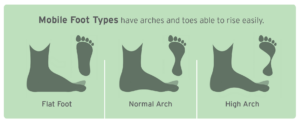
Figure 4.4. Mobile foot types: The toes and arches are able to rise easily.
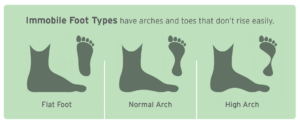
Figure 4.5. Immobile foot types: The toes and arches are unable to rise easily.
Absolute contraindication for Biopods / Barefoot Science implementation: Hallux rigidus (complete immobilization of the hallux of any cause – genetic, arthritic, traumatic, or surgical).
Habitual Footwear Use and Activity-Related Parameters
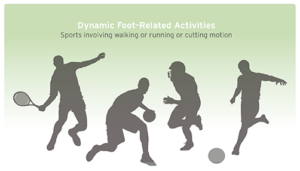
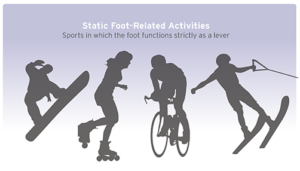
Barefoot Science Legacy and Dynamis insoles provide adjustable stimulus intensity levels. Typically, when initially using these insoles, the optimal stimulus level is determined, first, by the stimulus most suitable for specific foot types (see Figures 4.4 and 4.5). A more aggressive stimulus level is best for higher-intensity “Dynamic Foot-Related Activities” in loose-fitting, flexible footwear). A moderate degree of stimulus is best suited to everyday use in loose-fitting, flexible footwear. The least aggressive stimulus levels are best used or standing or lower-intensity activities and for tight-fitting footwear. Lower stimulus levels are also preferred for “Static Foot-Related Activities” in tighter fitting footwear.
Biopods Catalyst insoles provide non-adjustable variable stimulus that is best suited to everyday use in loose-fitting, flexible footwear.
Biopods Resonance insoles provide the non-adjustable variable tactile stimulus of the Catalyst model, while integrating an oscillating magnetic field surrounded by field of quartz crystals. These insoles are frequency tuneable – for those seeking resonance benefit.
Biopods Footwear provide the user with the option of varying the Pods’ stimulus intensity. Typically, the optimal Pods stimulus level is determined, first, by comfort or by starting with the stimulus most suitable for specific foot types (see Figures 4.4 and 4.5). A more aggressive stimulus may be preferred for higher-intensity “Dynamic Foot-Related Activities”. A moderate degree of stimulus is often best suited to everyday use. The least aggressive stimulus is often best suited for standing or lower-intensity activities.
Regardless of insole or footwear use, the user should always let comfort be their guide in selecting the most appropriate stimulus level. A more aggressive stimulus level does not necessarily produce better or faster results. The brain is more alert to subtle varied stimulus.
Dynamic Foot-Related Activities: Sports involving walking or running or cutting motion (e.g., soccer, baseball, basketball, tennis, football).
Static Foot-Related Activities: Sports in which the foot functions strictly as a lever (e.g., waterskiing, cycling, snow skiing, rowing, skating).
Dynamic and Static Blended Activities: Activities requiring prolonged standing and moderate amounts of walking (e.g., retail sales jobs, warehouse workers, cashiers, production line workers, hospital workers).
Conservative Treatment Modalities
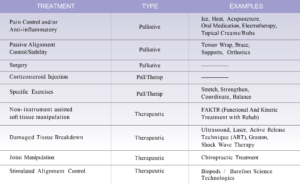
The singular intent of Biopods / Barefoot Science products is Foot-Related Function Rehabilitation and maintaining optimal function. This intent implies that the optimal rehabilitation of all weight- bearing mechanics and the entire kinetic chain that rely on optimal foot function will follow. True rehabilitation (to be equivalent to the approach taken regarding every other body region) cannot be achieved via palliative treatment (i.e., simply providing comfort) modalities.The use of specific-purpose, therapeutic measures is necessary for true rehabilitation. From the table below, it is apparent that four therapeutic options are implicated as components of a truly effective foot (and related gait issues) rehabilitation program.
Table of Treatment Options
Factors Affecting the Treatment Plan and Prognosis – Assuming constant use of Biopods / Barefoot Science products during all weight bearing activities:
1. Age:
- [< 20 yrs: Biopods effect is quick and easy; for damaged tissue, Rx~4 sessions]
- [20-40 yrs: Biopods effect is 1 weeks; for damaged tissue, Rx~6-8 sessions]
- [40-60 yrs: Biopods effect is 2 weeks; for damaged tissue, Rx~8 sessions]
- [> 60 yrs: Biopods effect is 3- 4 weeks; for damaged tissue, Rx~8 – many sessions]
2. General Health:
- Poor nutritional status: Results in a slower rate of tissue healing whether from adapting to Biopods / Barefoot Science stimulus or emergence of latent tissue damage revealed by adaptation to Biopods / Barefoot Science.
- Diabetic patient: If a long history, or severe symptoms, it will result in a much slower rate of tissue healing; if secondary therapy is needed, adaptation to the Biopods / Barefoot Science stimulus may be (but not necessarily) slower.
- Poor fitness level: No effect on rate of adaptation to the Biopods / Barefoot Science stimulus; low fitness usually shows slower rate of response when secondary therapy is needed.
- Neurologic disorders: The presence of MS, ALS, Parkinson’s, etc., unpredictable outcomes; neuropathy often has rapid, efficient adaptation to Biopods / Barefoot Science stimulus (but max results are usually not expected); response to tissue therapy, when it has become needed, can be prolonged.
3. History of Significant Lower Limb Trauma:
- Knee instability (due to traumatic ligament damage): Biopods / Barefoot Science stimulus cannot stabilize the loss of internal knee ligaments, but will create optimal alignment, thus decreasing prior degenerative patterns.
- Fused hallux (via surgery, advanced arthritis or congenital): This condition predictably shows the poorest response to Biopods / Barefoot Science stimulus; without the Windlass Effect foot rehab cannot occur.
- Recurrent ankle sprains: The response to Biopods / Barefoot Science products is usually excellent but, depending on the amount and severity of lateral ankle ligament and tendon damage present, much secondary therapy may be needed.
- Fractures: If healing has occurred with perfect bone alignment there is a minimum of, or nil, tissue damage to rehab; but often, and especially if bone has healed with poor alignment, there can be secondary tissue damage to repair; if a femur, tibia, or fibula has healed “short,” a heel lift may be needed beneath the Biopods / Barefoot Science insole for optimal rehab.
- Achilles tendon rupture/repair: If optimal length has been surgically restored, there is usually no complication to ideal adaptation to Biopods / Barefoot Science products.
- Torn hamstring: A belly tear may, or may not, require secondary tissue therapy to adapt to Biopods / Barefoot Science stimulus; however, tears at either of the insertion regions usually require secondary therapy to accommodate the (usual) shift in knee alignment that accompanies kinetic chain rehabilitation, via Biopods / Barefoot Science stimulus.
- Myositis ossificans: The difficulty in alleviating this condition does not, typically, interfere with the Biopods / Barefoot Science rehabilitative benefits.
4. Daily Activity Levels:
- Running sport athletes: The high performance demands of such individuals implies a very high likelihood of the emergence of even tiny pre-existing sites of tissue damage, via the Biopods / Barefoot Science adaptation process.
- Weight bearing fitness: Participants will have a slight increased likelihood of emergence of pre-existing tissue damage, via the Biopods / Barefoot Science adaptation process.
- Jobs requiring constant weight bearing: The likelihood of latent symptom emergence, via Biopods / Barefoot Science use, is moderate.
- Jobs requiring constant sitting: The likelihood of latent symptom emergence, via Biopods / Barefoot Science use, is minimal.
- Weekend warriors: Participants will often show dramatic inflamed aggravations of their pre-existing tissue damage sites during adaptations to Biopods / Barefoot Science.
*All the above generalizations are magnified (for the worse), for those who utilize Biopods / Barefoot Science products only intermittently during their weight bearing activities*
Common Sites of Presenting Symptoms, Emerging Symptoms, their Pathomechanics and Biopods / Barefoot Science Treatment Methodologies
The following tables justify the description of Biopods / Barefoot Science as a panacea (i.e., the dysfunctional foot, as per the previous discussion, is the singular basis for each emerging, or already symptomatic, site of tissue damage).
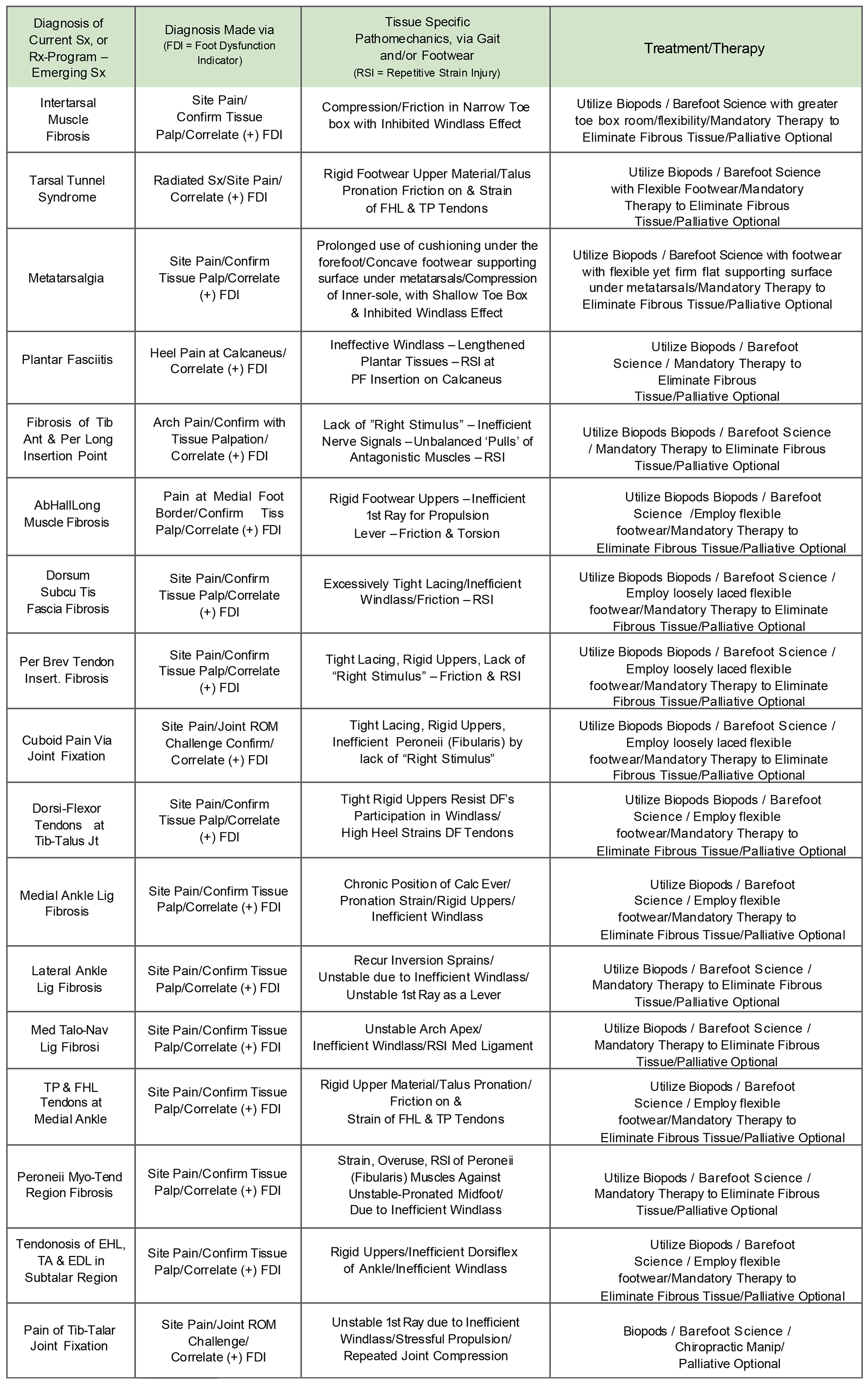
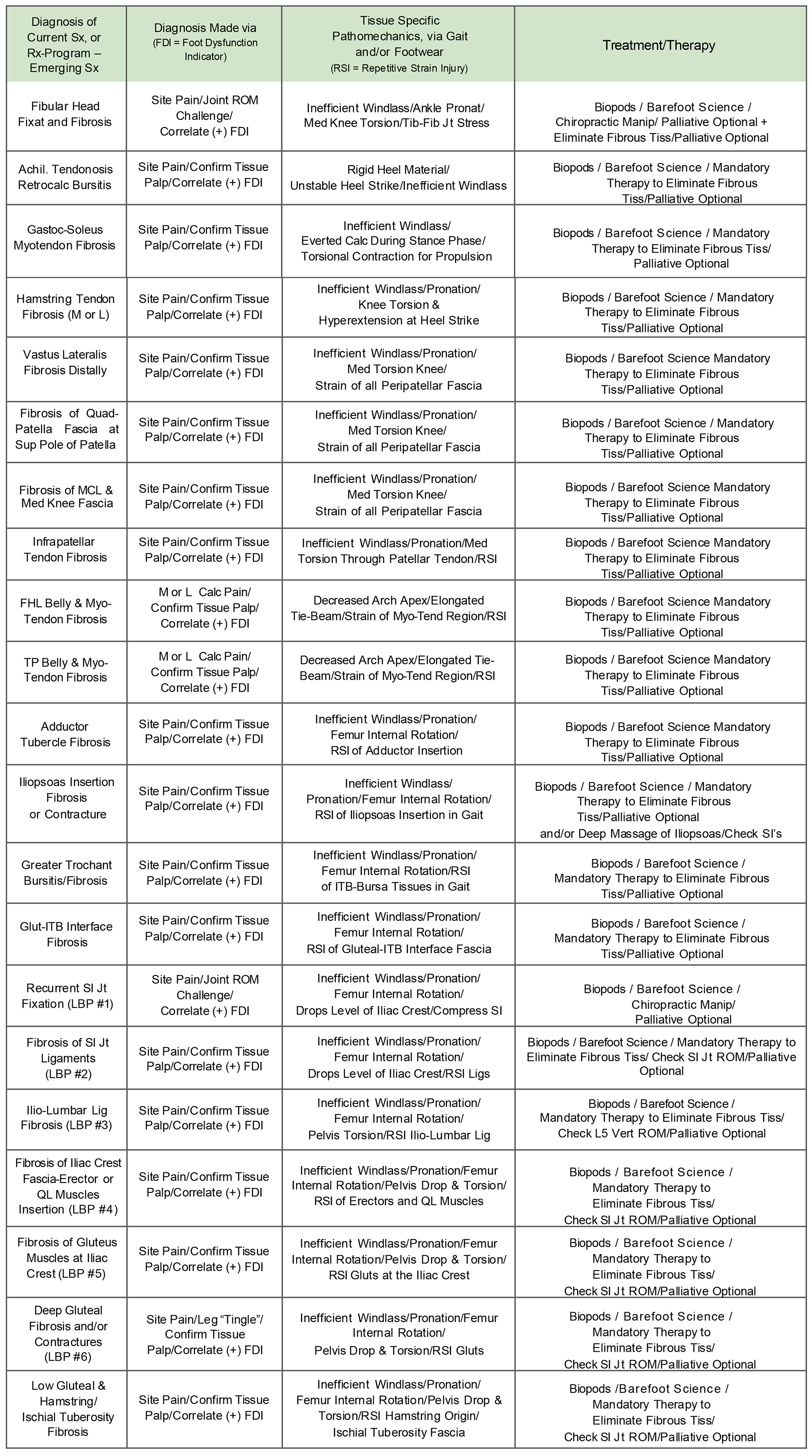
The following table is intended to demonstrate the relationship between Foot Dysfunction Indicators and the maladapted foot mechanics that created each indicator. Each example here, begins with the assumption of an absence of “Right Stimulus” and demonstrates a possible, chronic manifestation of “Wrong Movement”.
Addendum: Contraindications and Challenging Applications that may require additional considerations
There are several contraindications and pathology symptoms that may require additional considerations.
Contraindications
One absolute contraindication for implementation of Biopods and Barefoot Science products is hallux rigidus, or complete immobility of the hallux due to genetics, arthritic, traumatic, or surgical fusion.
The healthcare practitioner should verify complete immobility by attempting to move the great toe by passively challenging the hallux into its extended position. If the great toe is fused (i.e..completely rigid), Biopods / Barefoot Science products will have little or no benefit and may be uncomfortable for the user. (Figure 4.6.)
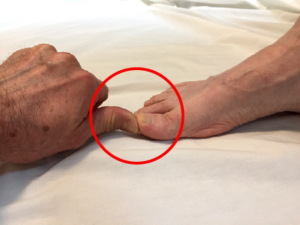
Figure 4.6.
If the healthcare practitioner can demonstrate at least moderate, passive extension in the great toe, Biopods / Barefoot Science products may be employed. (Figure 4.7.)
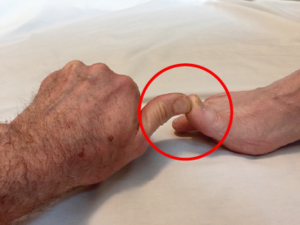
Figure 4.7.
Challenging Applications
While most patients will adapt to Biopods / Barefoot Science products with minimal issues, there are a number of potentially difficult applications that, despite initial indications of less-than ideal applicability, can be overcome with the use of complementary therapies. These situations may also indicate an exception to the criteria for selecting the appropriate Biopods / Barefoot Science stimulus level.
- Absence of voluntary neurologic control of extensor hallucis longus muscle activity offers an unpredictable outcome. (Figure 4.9.) Success will likely depend on the specific cause of the loss of voluntary extensor hallucis longus activation (e.g., peripheral neuropathy, MS, ALS, Parkinson’s). In some instances, Biopods products may induce reflex activation of the extensor hallucis longus; therefore, it is a clinical trial worth pursuing. In these instances, the practitioner may want the patient to test various Biopods / Barefoot Science stimulus levels to determine which will produce optimal results, depending on the patient’s condition and footwear type.
- Inability to dorsiflex one of both of the talonavicular joints beyond the 90° position due to mechanical joint fixation indicates that mobilization or manipulation would be of benefit. (Figure 4.8.) The practitioner should select the therapy they believe will be most applicable and recommend self-therapy (e.g., heel walks and/or repetitive, active, full-range dorsiflexion with the heel resting on the floor) concurrent with regular Biopods / Barefoot Science use during gait.
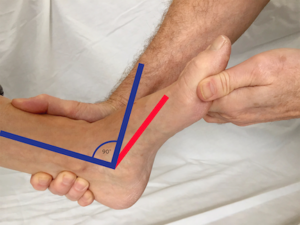
Figure 4.8.
- Neurologic loss of voluntary control of either or both tibialis anterior or peronei (fibularis) muscles offers an unpredictable outcome. (Figure 4.9.) Success will likely depend on the specific cause of the loss of voluntary tibialis anterior and/or peronei muscle activation (e.g., peripheral neuropathy, MS, ALS, Parkinson’s). In some instances, Biopods / Barefoot Science products may induce reflex activation of the tibialis anterior or peroneii; therefore, it is a clinical trial worth pursuing. In these instances, the practitioner may want the patient to test various Biopods / Barefoot Science stimulus levels to determine which will produce optimal results, depending on the patient’s condition and footwear type.
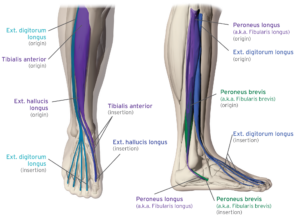
Figure 4.9.
- Ballerina ankle configuration is a condition in which there is a virtual straight line down the tibia and foot dorsum when lying supine. (Figure 4.10.) This may indicate that the muscles of ankle dorsiflexors are much weaker than their antagonist plantar flexors and may also demonstrate insufficient dorsiflexion at the talonavicular joint due to a mechanical fixation. In this case, the practitioner should employ one of the following strategies, depending on the severity of muscle imbalance:
-
- Mobilization or manipulation therapies concurrent with Biopods / Barefoot Science use – to restore sufficient mobility to the talonavicular joint. In addition, recommend self-therapy that includes heel walks and/or repetitive, active, full-range dorsiflexion with the heel resting on the floor.
- When a significant muscle imbalance is observed, the aforementioned therapies may be needed as a “pre-therapy” before a justifiable positive outcome can be expected and Biopods / Barefoot Science can be put to use.
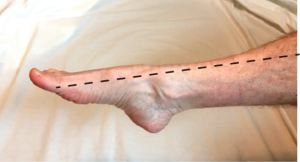
Figure 4.10. Ballerina ankle configuration.
- Notably fibrotic regions, especially at the myotendonous junction and/ or insertions of the tibialis anterior and/ or peroneii may become painful as a result of the stimulus intensity of Biopods / Barefoot Science products. After evaluating the severity, thickness, and chronicity of the fibrotic regions, you may opt to employ one or more soft tissue mobilization therapies (e.g., therapeutic ultrasound, A.R.T., Graston Technique® , deep tissue massage) to reduce or eliminate the fibrotic tissues prior to or during implementation of Biopods and Barefoot Science products. (Figure 4.11.) In these cases, the patient may initially require a lower Biopods / Barefoot Science stimulus level until the fibrotic tissue has been sufficiently reduced or eliminated.
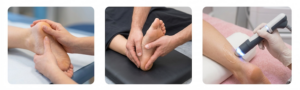
Figure 4.11.
Lesson 4 Quiz
Select all answers that apply. A score of 70% or higher is required to pass.
No email is required to take the quizzes. After passing all four lessons in this browser, you can request an emailed certificate of completion.
Request Certificate of Completion
Enter your details exactly as you would like them used for the certificate email.
Please confirm the certificate name before submitting. The emailed certificate will use this text.