The Critical Foot-Brain Connection
A Guide to Natural Gait Mechanics and Therapeutic Foot Care
Lesson 3 – Gait-related Pathologies
If the video player does not load, please ensure your browser allows embedded video.
Downloads: Lesson 3 Course Book / Monograph
Sections and Keywords:
- Maladaptive foot function and resultant gait-related pathologies
- Ideal state = “Right Stimulus” and “Right Movement” as observed in barefoot populations
- Protective reflex in unshod
- Lower limb kinetic chain
- Weight-bearing “sweet spot”
To fully grasp the many manifestations of maladaptive foot function and resultant gait-related pathologies, it is helpful to understand the “ideal state” of a bipedal huma n being. That “ideal state” can only exist when the feet function in an environment that facilitates both Right Stimulus and Right Movement, as observed in barefoot populations with few debilitating foot-related pathologies.
The innate protective reflex and optimized neuromusculoskeletal function and alignment of the habitually unshod are a direct result of the minimal tissue stress and/or degeneration that occurs throughout the lower limb kinetic chain during day- to-day activities. This dynamic weight-bearing “sweet spot” function/alignment provides us with a model of optimal gait technique.
Generally speaking, the quality of the function and alignment of an individual’s kinetic chain is a predictor of future weight-bearing degeneration and resultant gait-related pathologies.
To understand the tissue-specific pathophysiology of gait-related pathologies, it is useful to think of a shod foot as a fettered structure. When viewed this way, it is easy to conclude that the shod foot has significant total foot immobilization or regions of significant immobilization. There are several basic principles (listed below) that define the development of pathologies.
In the words of R. Gotlin, editor of Sports Injuries Guidebook (Sports Injuries Guidebook (Champaign, IL: Human Kinetics, 2008), “Simply put, function is the outcome of any activity.”
Physiologically speaking, our body function is governed by Wolff’s Law of Bone Transformation, Davis’s Law (of soft tissue adaptation), and neuroplasticity (the adaptive capabilities of the nervous system).
The Effects of Immobilization
Immobilization can have significant effects on muscle, the synovial joints, periarticular soft tissues, and the nervous system. Following are some of those effects:
- Muscle: loss of strength, more rapid fatigue, and atrophy.
- Synovial joints: decreased water content, increased collagen cross-links, loss of collagen mass, increase in fibro-fatty CT in joint space, synovial fold adhesions, adhesions of fibro-fatty CT to cartilage surfaces, cartilage atrophy, ulceration of cartilage contact sites, disorganization of ligament components, and weakened ligament insertion site.
- Periarticular soft tissues: joint stiffness, restricted movement, intra-articular adhesions, poor collagen orientation, significant water loss (thus, less resilience), increased collagen cross-links (thus, a loss of elasticity).
- Nervous system: loss of muscle function and proprioceptive sense and atrophy.
Common forms of immobilization:
- Casts
- Braces
- Orthotics
- Footwear
The effects of immobility in the creation of pathology:
- Immobility can be the cause of many pathologies.
- Immobility can lead to functional maladaptations.
- Functional maladaptations can lead to acute and chronic pain.
The Relationship of Footwear to Lower Limb Biomechanics and Resultant Pathologies
Functional and anatomical maladaptations
Maladaptive neuromusculoskeletal function and related maladapted reflex function are typically observed in shod populations. For shod populations, the cushioning, restrictive, and supportive characteristics of footwear can create these consequences:
- Proprioceptive sensory input and tactile stimuli are dampened, resulting in insufficient stimuli.
- The natural, dynamic “Right Movement” throughout the feet, ankles, legs, hips, and lower back is restricted or encumbered.
- The result is that the “safe” force management capabilities of these areas are impaired throughout the demands of three-dimensional activities.
During maladaptive neuromusculoskeletal function, impairment occurs in the movement being generated, the proprioceptive input, the sensory input, and the tactile stimulus from ground contact by each foot. This is caused by:
- artificial cushioning, which dampens the tactile sensory (“Right Stimulus”) input required to initiate an adequate protective reflex response during reflex-activated anticipation (or preparation) for the next step (while the foot is off the ground)
- artificial support and restrictions to musculoskeletal “Right Movement” that impede the dynamic three-dimensional movement of the musculoskeletal structure, leading to instability.
As a result, the following can happen:
- Muscles do not receive the signals required for effective alignment and stability of the bones in the foot, ankle, and leg (prior to ground contact).
- The bones of the foot, ankle, and leg cannot dynamically align and stabilize because of the “support” or “restrictions” throughout all skeletal and neuromuscular gait phases.
As a result, the neuromusculoskeletal structure becomes incapable of safely managing the forces that are generated and its performance capabilities are impeded by compensatory, imbalanced, and inefficient muscle use.
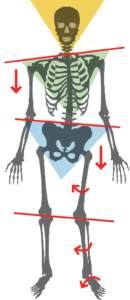
Figure 3.1. Poor skeletal alignment due to maladapted neuromuscular function.
The stressors that are generated cause damage and contribute to the creation of a less robust neuromusculoskeletal structure (i.e., weaker and less flexible), significantly increasing the risk of injury.
In short, the shod environment promotes Poor Technique.
Over time and after much repetition, maladaptive neuromusculoskeletal mechanics become the “Maladapted Reflex Condition,” which can be reconditioned or retrained to become the “Habitual Optimal Functional Condition” by employing Proper Technique activities of sufficient intensity and duration.
For example, the Maladapted Reflex Condition is observed when a limb is placed in a splint or cast. Even after a relatively short period of two weeks, atrophy, joint stiffness, loss of soft tissue resiliency, and diminished protective reflex capabilities will be noticeable. In cases like this, rehabilitative therapies (e.g., exercise programs) are commonly employed to regain optimal function.
- Artificial cushioning and control that inhibits “RightStimulus”.
- Artificial restrictions that inhibit “RightMovement.”
Footwear design characteristics and gait-related pathology
It is commonly accepted that poor foot biomechanics play a significant role in the development of pathologies that include metatarsalgia, plantar fasciitis, hallux valgus, heel spurs, neuromas, Achilles tendonitis, shin splints, patello-femoral syndromes, and hip and back pain. Although it is often argued that genetics plays a key role in dysfunctional foot biomechanics, there is very little science to support this hypothesis. Conversely, there is abundant scientific evidence that points to footwear as the leading cause of foot dysfunction and most associated foot-related pathologies.
Most conventional footwear designs affect the feet much like a cast or splint affects an arm or leg. Chronic restrictions imposed by footwear cause muscle atrophy, loss of bone mass, less-than-ideal bone geometry (through remodeling), and joint stiffness. Wearing shoes can actually weaken the feet and legs, increasing their susceptibility to injury.
Shoes insulate the soles of the feet from the subtle varied stimulus required for optimal neuromuscular function throughout the lower limb-hip-back kinetic chain. This dampened nociceptive stimulus impairs the timing and intensity of optimal proprioceptive muscle activity throughout the kinetic chain, effectively destabilizing its dynamic load-bearing and propulsion capabilities (i.e., the dynamic mechanical capabilities – alignment and muscle efficiencies – are impaired). This dynamic instability results in degenerative stresses in the muscles and at joints that cause or contribute to various “arthritic-like” problems (pathologies) in the feet, legs, hips, and back.
In addition to improper sizing, there are many ways in which footwear design characteristics contribute to poor foot function. (See Table 3.1.)
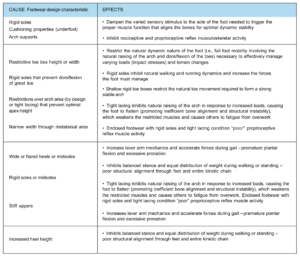
Table 3.1. How footwear design characteristics contribute to poor foot function. 58
Each design characteristic imposes singular negative effects on lower limb, hip, and back neuromuscular function; when combined, their negative effects are magnified significantly. Most footwear on the market today features many of these characteristics, which shoe manufacturers actually promote as beneficial for their customers. In reality, damaging degenerative stresses increase relative to the amount of cushioning, support, and restrictiveness and inherent restrictions of the footwear.
Lack of nociceptive and proprioceptive sensory feedback
A shoe that is rigid and supportive, or one that features abundant cushioning greatly diminishes the subtle varied sensory feedback required for optimal “natural” nociceptive and proprioceptive reflex muscle-firing sequences that stabilize the arch.
According to Robbins SE, Gerard GJ. Athletic Footwear: Unsafe Due to Perceptual Illusions. Medicine and Science in Sports and Exercise 23(2): p. 217, 1991.“ Wearers of expensive running shoes that are promoted as having additional features that protect (e.g., more cushioning, pronation correction), are injured significantly more frequently than runners employing inexpensive shoes (costing less than US $40).
Modern footwear – running shoes, in particular – substantially diminishes sensory feedback but does not diminish injury-inducing impact. That is a dangerous situation.
Supportive cushioning features are widely promoted as essential for safety when walking or running to mitigate chronic overload on the lower extremities due to modern man’s purported inherent fragility. This is inconsistent with reports that indicate habitually unshod humans are not subject to chronic overloading when running and are virtually free of foot-related pathologies.”
Considerable research indicates that the lower extremities of predominantly barefoot populations are inherently durable and that chronic overloading is a consequence of wearing footwear. Studies on barefoot populations indicate that, because of the intrinsic properties of biomechanically sound feet unfettered by the constrictions of footwear, they can effectively manage the forces and stresses generated during most rigorous activities on the hardest surfaces. Manmade cushioning and motion control designs pale in comparison.
Restrictions in structural alignment
Footwear for women that features narrow pointed toe boxes and high heels has generated criticism from foot care professionals. It is commonly understood that improper footwear (by design or size) contributes to a host of foot pathologies, yet there are conflicting opinions about what constitutes appropriate footwear and its effect on the foot’s structure and the dynamics of gait.
Maladaptive bone remodeling
The ancient Chinese practice of foot-binding and the use of Lotus shoes are excellent examples of the ways in which negative environmental influences can restructure the foot. The practice of foot-binding in China spanned more than a thousand years, with millions of women enduring and suffering severe lifelong disabilities from this extremely painful process. Even though it was banned in 1911, it continued until the New China was founded in 1949.
Similar deformities are also co mmo n in today’s modern society. The environmental influences of the toe box design characteristics of restrictive footwear clearly demonstrate their negative physiological impact. Not only does footwear impede healthy optimal neuromuscular function, it actually contributes to maladaptive bone remodelling.
According to Wolff’s Law, because bone is living tissue and constantly undergoing cellular regeneration, it has the ability to change and adapt. For example, this adaptation is observed when unhealthy repetitive stress results in the formation of heel spurs at the insertion of the plantar fascia to the calcaneus. In this case, the bone remodels toward the source of repetitive tension as a means of mitigating the stress. Bunions and “pump bumps” also demonstrate the ways that unhealthy repetitive stress affects bone. By contrast, healthy repetitive stress generated by moderate exercise, such as running or lifting weights, helps build and maintain bone density.
Unhealthy neuromusculoskeletal mechanics
The most damaging footwear design characteristics are those that inhibit subtle variable sensory input to the soles of the feet, those that prevent structural integrity of the domed arch dynamic and those that increase the forces and stresses on the musculoskeletal structure.
In addition to dampening subtle varied sensory feedback, rigid soles and restrictive toe box areas exert the most damaging influence by inhibiting dorsiflexion of the toes, which is necessary for alignment and stabilization of the strong, functional dome- like dynamic of the interlocking bones in the foot and ankle. Chronic interruption of this dome- like dynamic can actually condition improper muscle-firing sequences and result in either compensatory overuse or a failure to fire at all. The dynamic is further hampered by restrictions over the arch area that prevent the formation of the optimal arch apex, which is necessary for efficiently managing specific loads. These restrictions may be inherent to the footwear design, and may result from improper shoe size or from over-tight lacing.
These dampening and restrictive influences negatively impact all types of developed foot function albeit in slightly different ways.
While a rigid high arch is structurally capable of managing greater loads, without adequate muscular activity to maintain its domed integrity, the arch system will abruptly fail mechanically when loads exceed its structural capacity. This results in more “acute-like” degenerative stresses and a diminished capacity to effectively manage “shock.”
A hypermobile or flat foot is structurally capable of managing lesser loads. In both instances, the foot’s load-bearing capacity is notably diminished without appropriate muscular activity to maintain the integrity of the arch system. A functional arch system is either not present (flat) or fails immediately (hypermobile) at forefoot/ground contact and results in more “chronic-like” degenerative stresses and compensatory muscle imbalances throughout the closed kinetic chain.
Individuals exhibiting pes cavus feet typically demonstrate less midfoot flexibility and excessively supinate, invert, and toe-in through heel strike to toe off, thus rolling off the 4th and 5th metatarsal heads during propulsion. During normal walking gait, the foot and leg are abducted excessively at heel contact. As the body’s center of mass moves forward over the foot through heel strike, full weight-bearing, propulsion, and toe off, the abducted foot and abducting leg cause a diagonal rolling about and over the lateral side of the 4th and 5th metatarsal heads. The propulsion stride is inefficient, directing the body’s mass laterally and forward relative to the foot’s positioning, generating tremendous torsional stresses on the 4th and 5th metatarsal heads.
While the high rigid arch is structurally capable of managing greater loads than the hypermobile foot, when its load-bearing capacity is exceeded (without appropriate nociceptive and proprioceptive muscle activity), the structural integrity fails more acutely, resulting in more traumatic (sudden) degenerative stress. In addition, the foot generates a tremendous amount of torque and friction within the shoe.
Depending on the shoe design, these stresses often result in excessive calluses, bunions, bunionettes, and metatarsalgia. Accelerating torsional stresses are also generated at the knee, contributing to conditions that include ligament and cartilage damage, chondromalacia, and patello-femoral syndrome.
Regardless of foot type, habitual use of footwear that dampens somatosensory stimulus and/or creates a restrictive environment will condition improper (maladapted) muscle-firing sequences throughout the supporting musculature of the lower limb, hip, and back. Muscles will cease to fire completely or fire at inappropriate intervals. This can lead to muscle atrophy (from lack of use) or hypertrophy (from overwork) and to muscles becoming easily fatigued. Pathologies, such as plantar fasciitis, heel spurs, or shin splints typically develop when these dynamics are present.
When the supporting musculature of the foot fails to provide structural stabilization, the resulting inefficient alignment negatively affects the mechanical geometry of the smaller and deeper levels of intrinsic musculature. Poor mechanical geometry leads to compensatory and inefficient (overworked) muscle function, increased stress, and fatigue. These smaller muscles are best suited for fine motor control and dexterity and are not able to effectively manage the forces generated by an unstable and poorly aligned structure.
As the unstable structure enters first into the weight-bearing phase of gait, followed by the propulsion phase, the poorly aligned and unlocked bones are unable to effectively manage the forces and stress that are generated. Intensifying as they migrate up through the musculoskeletal structure, these forces and stresses can lead to chronic or acute pathologies at the sites of the weakest links in the kinetic chain, depending on activity levels. Conditions such as Achilles tendonitis; patello-femoral syndrome; and knee, hip, and back problems are commonly associated with these poor structural dynamics.
Unfortunately, the stresses generated by poor structural dynamics are exacerbated by footwear design characteristics, some of which were actually engineered with the intention of stabilizing the unstable foot.
From a mechanical perspective, the effects of various footwear characteristics (e.g., midsole and heel height/flare) are synergistic in their resultant accelerating velocities of plantar flexion, pronation, supination, inversion, and eversion. In varying combinations (due to design geometry), they impact significantly on structural loads, magnify the horizontal tie beam and torsional stresses throughout the foot and ankle, and negatively affect structural integrity. These design geometries directly influence the location and degree of poor structural alignment and the relative increase in degenerative stress at the joints throughout the kinetic chain, particularly the knees, hips, and lower back. Clearly, footwear design characteristics play a major role in the development and exacerbation of musculoskeletal pathologies throughout the gait-related kinetic chain.
Each of the signs, symptoms, and diagnoses listed below is a net consequence of the maladapted mechanisms, excessive stresses, compensatory muscle activities, footwear restrictions – or any combination – that result from the maladaptation of kinetic chain function discussed above.
Foot Dysfunction Indicators (FDIs)
The presence of any of the following conditions directly indicates that foot function has maladapted and that related neuromuscular mechanics are in need of rehabilitation and are the cause of nontraumatic lower limb symptoms and/or pathologies.
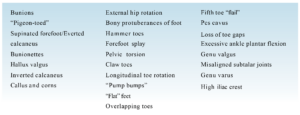
Table 3.2. Indicators of foot dysfunction.
Common foot-related pathologies caused or exacerbated by footwear use. Symptoms manifest at the weakest link in the kinetic chain, as influenced by activities and footwear characteristics.
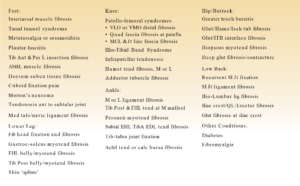
Table 3.3. Common foot-related pathologies.
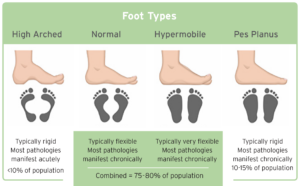
Figure 3.2. Four primary foot types. Each presents pathologies in distinct ways.
Lesson 3 Quiz
Select all answers that apply. A score of 70% or higher is required to pass.
No email is required to take the quizzes. After passing all four lessons in this browser, you can request an emailed certificate of completion.
Request Certificate of Completion
Enter your details exactly as you would like them used for the certificate email.
Please confirm the certificate name before submitting. The emailed certificate will use this text.
Continue to Lesson 4