The Critical Foot-Brain Connection
A Guide to Natural Gait Mechanics and Therapeutic Foot Care
Lesson 1 – The Science
If the video player does not load, please ensure your browser allows embedded video.
Downloads: Lesson 1 Course Book / Monograph
Neuromuscular Lower Limb Mechanics and Foot-Related Problems:
The New Paradigm
(For more detailed coverage of this topic, refer to The Future of Foot Care Monograph, pages 3-4.)
According to the American College of Foot and Ankle Surgeons, more than 66% of the North American population currently experiences some type of foot-related discomfort. And, according to the American Orthopedic Foot and Ankle Society, 85% of the population will consult a medical professional for one or more foot-related problems over their lifetimes.
Contrast that with habitually barefoot populations, less than 3% of which exhibit foot-related problems and almost none of these are debilitating.
“Conventional footwear is designed around ‘normal’ foot function ideologies that are based on the accumulated observations of shoe-wearing populations — ‘normal’ being an accepted standard, means, or average.” – William A. Rossi, Podiatrist
This Course is an invitation to view the realm of foot-related pathologies from a completely different perspective than the current, commonly held views.
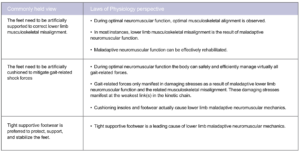
Table 1.1. How the Laws of Physiology perspective differs from commonly held views about foot-related pathologies.
Our intention is to provide a new status quo for viewing lower limb neuromuscular mechanics, the related causes of maladaptation, and the resultant injuries, as well as to develop effective therapeutic treatment methodologies that employ disruptive technologies.
From a neuromusculoskeletal physiological perspective, the feet are no different from any other part of the body’s neuromusculoskeletal system. The feet should be treated with the same physiological principles with respect to optimal function, pathologies, rehabilitation, and performance enhancement.
The body’s innate intelligence will, always, attempt to maintain optimal neuromusculoskeletal function, create better health, and heal ailing/injured body parts. The feet alone are not isolated from this functional process; however, this optimal function can only be maintained in the right environment, one that facilitates optimal neuromusculoskeletal dynamics.
This raises a very controversial question: Why does conventional foot care attempt to stabilize or protect feet with tight shoes, orthotics, and cushioning when we artificial restriction, support or cushioning is not recommended for any other area of the body unless there is an unstable fracture, unstable dislocation, or Grade 3 ligament tear? Even in those cases, splinting, casting, or bracing is employed for the shortest period possible.
Feet are not inherently unstable. They require neither some form of artificial support, to correct alignment and stabilize the lower extremities, nor cushioning to mitigate shock-related forces.
Regardless of an individual’s genetic predisposition, foot-related neuromuscular dysfunction and related structural misalignment are a conditioned response resulting from an individual’s habitual use of conventional footwear. In essence, from a sports training perspective, conventional footwear creates a “Poor Technique” environment that entrains the neuromusculoskeletal maladaptation, which is the root cause of nontraumatic, foot-related pathologies. For example, from this perspective, over-pronation is not viewed as the cause of specific foot-related pathologies; rather, over-pronation is viewed as a symptom of maladaptive neuromusculoskeletal mechanics.
Rather than focus on the intricacies of the vast array of symptoms, we focus on providing therapeutic “Proper Technique” solutions that rehabilitate and optimize the lower limbs, hips, and lower back neuromuscular performance.
Biopods and Barefoot Science insole and footwear solutions are based widely on accepted neuromusculoskeletal physiology and on the same state-of-the-art conditioning principles employed by elite athletes and sports medical professionals in rehabilitation, performance enhancement, and injury prevention training programs.
“Natural gait is biomechanically impossible for any shoe-wearing person. ‘Natural gait’ means the pristine, ideal state, the ideal form and function stemming from nature itself.” – William A. Rossi, Podiatrist
The Science: Optimal Neuromuscular Mechanics
FACT: Healthy neuromusculoskeletal function = optimal performance (strength, flexibility, endurance, coordination, balance, agility, robustness, quickness, speed, and biomechanical alignment) with minimal propensity to injury.
FACT: Optimal healthy neuromusculoskeletal function (“Proper Technique”) requires:
- Appropriate and variable stimulus (since the brain tunes out constant and/or repetitive stimuli and stops responding to it), herein referred to as “Right Stimulus.”
- Unrestricted and optimally aligned joint and soft tissue movement and mobility, herein referred to as “Right Movement.”
Subsumed within the body’s innate intelligence are protective reflex mechanisms, which always attempt to facilitate optimal healthy neuromusculoskeletal function. However, this ability is compromised by environments that dampen “Right Stimulus” or restrict “Right Movement.”
Where are we now?
Because the vast majority of footwear attenuates “Right Stimulus” and restricts “Right Movement,” it will condition the maladaptive function that is the underlying cause of most foot-related problems that can manifest symptoms throughout the feet, knees, legs, hips, and lower back.
Using cushioning and supportive products, such as insoles and orthotics, in an attempt to treat foot-related symptoms, can have many negative consequences that include:
- They further dampen “Right Stimulus.”
- Prolonged use results in functional atrophy and an increasing dependence upon the artificial support/cushioning.
- They can cause poor neuromusculoskeletal function.
- They can facilitate “Poor Technique” neuromusculoskeletal mechanics throughout the feet, knees, legs, hips, and lower back, leading to poor functional performance, pain, and disability.
Where do we want to be?
We must address the cause of maladapted foot-related lower limb neuromusculoskeletal physiological function with rehabilitation using “Proper Technique.” This can lead to optimal neuromusculoskeletal physiology, enhanced functional performance, and optimized quality of life.
How do we get there?
We can achieve optimal neuromusculoskeletal physiology, enhanced functional performance, and optimized quality of life by:
- introducing the “Right (varied) Stimulus” into footwear
- using footwear that facilitates “Right (musculoskeletal) Movement”
- addressing abnormal joint mechanics and any preexisting fibrotic/scar tissue caused by the maladapted mechanics that can inhibit functional performance of the feet, knees, hips, and lower back.
Biopods / Barefoot Science products provide the “Right Stimulus,” but the insoles’ optimal effectiveness may be inhibited relative to the degree that the footwear in which they are used restricts “Right Movement.” (Even in restrictive footwear, Biopods / Barefoot Science Insoles have been shown to be more effective than custom orthotics at addressing foot-related problems.)
Biopods footwear provides the “Right Stimulus” and facilitates “Right Movement.”
Significance and benefits for healthcare and sports training professionals.
The underlying science of Biopods disruptive technologies offers a new paradigm for assessing and treating most foot-related pathologies. While Biopods products create an environment within footwear that stimulates and enhances optimal neuromusculoskeletal function, they do not address abnormal joint mechanics, preexisting fibrotic/scar tissue or inelasticity that inhibits the return of a full range of functional mobility. To achieve optimal benefits, joint and soft tissue manipulation therapies should be employed to break down the fibrotic tissue and return optimal elasticity and joint mobility. In some instances, mobilization or manipulation therapies need to be employed prior to the use of Biopods and Barefoot Science products.
Biopods and Barefoot Science products can also be used as a diagnostic tool for identifying non-symptomatic fibrotic tissue. As neuromusculoskeletal function improves with use of Biopods, these non-symptomatic fibrotic areas may become symptomatic.
Once identified, they are easily addressed, as noted above.
The Biopods’ therapeutic rehabilitative approach to treating feet and foot-related lower limb, hip and back pathologies is ideally suited to professionals with an interest in soft tissue mobilization, therapeutic rehabilitation, sports performance, and injury prevention. This scientifically based, yet innovative, approach very strongly differentiates itself from the current medical/orthotic treatment strategies.
The Underlying Science: Back to the Basics
“Simply put, function is the outcome of any activity.” – Robert S. Gotlin, Director of Orthopaedic and Sports Rehabilitation, Department of Orthopaedic Surgery, Beth Israel Medical Center and Professor of Physical Medicine and Rehabilitation, Albert Einstein College of Medicine of Yeshiva University.
The following is an excerpt from Gotlin’s Sports Injuries Guidebook: Understanding Functional Conditioning:
“Everyday functional movements include running, biking, throwing, walking, carrying a child, tying shoelaces, getting out of bed, and even switching from sitting to a standing position. Thus the benefits of functional conditioning are not limited to athletics. Its movements occur in some form in work, home, and sport environments. To perform these tasks, a chain reaction involving muscles, nerves, and joints occurs. If this chain is interrupted because of inadequate flexibility or lack of strength in part of the chain, a breakdown results, leading to a decrease in performance and to possible injury.
Exercises to help condition the body for functional improvements must meet all four of these criteria:
- They must include movements in all three planes (sagittal, frontal, and transverse).
- They must properly condition the body’s nerves and muscles to develop memory and help make movements “automatic.”
- They must condition a response to external forces and allow the body to make best use of outside influences such as gravity, ground reaction forces, and momentum.
- They must condition biomotor abilities (flexibility, strength, power, endurance, agility or coordination).
A quick look at these four criteria confirms that functional conditioning works beyond the realm of physical fitness and benefits the body during the activities that most people, athletes and non- athletes alike, do every day.
Neuroplasticity: Conditioning the Neuromuscular System
Functional conditioning requires training of the nervous system. For example, when bending down to pick up an object off the ground, you are unaware of the intricate coordination it takes for your body to execute this movement. The actions involved in the flexion and rotation of your spine, hips, knees, and ankles are not premeditated. The nervous system plays an integral role in this process. The body’s nerves send messages to the muscles, which direct the timing, means, and speed of movement. To clarify how this occurs, let’s take a closer look at the neurological mechanisms of the nervous system that are used during movement and their relation to functional conditioning and injury prevention.
The brain learns movement by developing motor programs. According to Physical Therapist, Gray Cook, motor programs are ways that the brain stores information about movement. Every time someone learns how to shoot a basketball or ride a bike, the brain creates a motor program that allows the athlete to repeat this activity without relearning the mechanics each time (Cook 2003). This is the nervous system’s method for running efficiently. Conditioning the neural network through repeated functional movements improves the way the body develops motor programs and helps the neuromuscular system operate to its highest potential.
Conditioning the nervous system through repetitive functional movements improves the proprioceptive feedback to the muscles in the body. Proprioceptors are sensory receptors located within the joints, muscles, and tendons. They receive input about the physical state of the body, constantly informing the central nervous system about muscle tone and the coordination of certain movements. Likewise, the way the body senses both touch and movement is referred to as proprioception, which means ‘sense of self.’
It is through proprioception that the body communicates with itself at a subconscious level. For example, you do not have to think about maintaining a particular posture or how to position your various body parts during a familiar movement. Your proprioceptors govern the spatial and temporal relations of your body and limbs in space, freeing your conscious mind to focus on other matters.
With conditioned proprioceptors, an athlete is in a better position to react, as joints and muscles respond automatically to protect the body from injury and other physical problems. For example, someone with a highly conditioned proprioception can slip on ice and land on the ground without turning an ankle. Essentially, to improve the nervous system’s response to movement, it is necessary to implement a conditioning program (Cook 2003).”
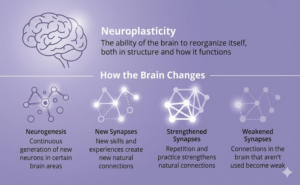
Figure 1.1. Neuroplasticity and the brain.
- Enact movement in all three planes
- Properly condition “automatic” movement memory
- Condition responses to external forces encountered in real life
- Condition for flexibility, strength, power, Endurance, agility, and coordination
- Condition neurology via restoration of nonpathologic physiology
The following is an excerpt from: K. Pearson, J. Gordon, Introduction to Sensory Motor Systems, University of Texas: Reflexes
“During normal movements, the central nervous system uses information from a vast array of sensory receptors to ensure the generation of correct pattern of muscle activity. Sensory information from muscles, joints, and skin, for example, is essential for regulating movement. Without this somatosensory input, gross movements tend to be imprecise, while tasks requiring fine coordination are impossible.
Reflexes have been viewed as stereotyped movements in response to the stimulation of peripheral receptors. This view arose primarily from early studies on reduced animal preparations in which reflexes were examined under a set of standard conditions. However, as investigators extended their studies to measure reflexes during normal behaviour, our concept of reflexes changed substantially. We now know that under normal circumstances reflexes can be modified to adapt to a task.
Three important principles are involved in the adaptation process. First, transmission in reflex pathways is set according to motor task. The state of the reflex pathways for any task is referred to as functional set.
Second, sensory input from a localized source generally produces reflex responses in many muscles, some of which may be distant from the stimulus. These multiple responses are coordinated to achieve an intended goal. Third, supraspinal centers play an important role in modulating and adapting spinal reflexes, even to the extent of reversing movements when appropriate.
Proprioceptive Reflexes Play an Important Role in Regulation of Both Voluntary and Automatic Movements
All movements activate receptors in the muscles, joints, and skin. These sensory signals generated by the body’s own movements were referred to as proprioceptive by Sherrington, who proposed that they control important aspects of normal movements. A good example is the Hering-Breuer reflex, which regulated the amplitude of inspiration. Stretch receptors in the lungs are activated during inspiration, and the Hering-Breuer reflex eventually triggers the transition from inspiration to expiration when the lungs are expanded. A similar situation exists in the walking systems of many animals; sensory signals generated near the end of the stance phase initiate the onset of the swing phase.
The primary function of proprioceptive reflexes in regulating voluntary movement is to adjust motor output according to the biomechanical state of the body and limbs. This ensures a coordinated pattern of motor activity during an evolving movement, and it provides a mechanism for compensating for the intrinsic variability of motor output.
An Overall View
Reflexes are coordinated involuntary motor responses initiated by a stimulus applied to peripheral receptors. Some reflexes initiate movements to avoid potentially hazardous situations, whereas others automatically adapt motor patterns to maintain, or achieve, a behavioral goal. The purposeful responses evoked by reflexes depend on mechanisms that set the strength and pattern of responses according to the task and behavioral state (known as functional set).
Many groups of interneurons in the reflex pathways of the spinal cord are also involved in producing complex movements such as walking and transmitting voluntary commands from the brain. In addition, some components of the reflex responses, particularly components of reflexes involving the limbs, are mediated via supraspinal (brain stem nuclei, cerebellum, and motor cortex). The convergence of afferent signals onto spinal supraspinal interneuronal systems involved in initiating movements provides the basis for the smooth integration of reflexes into centrally generated motor commands.”
The following is an excerpt from: D. Berger, K.Kain – Orienting and Defensive Responses: A Motor Development Perspective:
“Motor reflexes, which provide for optimal self-protective responses, may be disrupted as a result of trauma, but may also be disturbed in the course of otherwise normal motor development. These developmental disturbances may then be intertwined with disruptions caused by traumatic incidents. Proper functioning of the sensory systems is another critical element in the overall mechanism of self protection. As with motor reflexes, sensory systems may be disrupted due to trauma, or via disturbances in the original development process for these systems.
Orienting and defensive responses cannot be completely separated (e.g., orienting is a primary part of our capacity to defend). Likewise, the sensory and motor functions which are critical for self-protection often serve to support both orienting and defense.
In order for the threat response cycle to function properly, the sensory systems and motor functions that contribute to the ability to orient and defend must be integrated, functional, and available. Interruption of the normal development of the sensory systems or early protective reflexes may leave the person with an impaired capacity for defensive movements that predates the current traumatic event. Fortunately, the techniques for restoration of developmental reflexes parallel those for restoration of orienting and defensive responses. The essential repair process for each is similar: gently increase the demand for the missing reflexes until the body brings the appropriate movements into play.
The body systems related to orienting and defense must have the appropriate level of function available in order to meet the challenges to those systems. If there has been serious physical damage to any of the systems or orienting and defense, there may be a limit to how fully the orienting and defensive responses can return to full function.
Finally, the person must have an appropriate level of self-regulation in the autonomic nervous system (“ANS”) to accomplish the work of orienting and defensive response repair. It is the nature of orienting and defending that the triggering of these body responses happens when there is an experience of threat, or potential threat. By extension, these will be more activation of the sympathetic system when the perceived need for orienting and defense arises. If the person has limited self-regulatory capacity in ANS function, the increased activation associated with perceived threat will sometimes overwhelm rather than encourage orienting and defense responses. Ironically, when orienting and defense are perceived as being successful, it invariably leads to a calming of the sympathetic activation.
Proprioceptive System
Proprioceptors are nerve endings that give information about where different parts of the body are in relation to each other and how fast they are moving. The proprioceptive system supports three main functions: muscle tone, body image, and control of effort. These functions provide the foundation for learning motor patterns which become the skilled movements we call coordination.
Physical repair of orienting systems is a common focus in body therapy modalities. It is standard practice, for example, to do proprioceptive repair and re-training in a classical physical therapy treatment, using hands- on techniques, balance boards, and movement exercise.
Impairment of Orienting and Defensive Responses
Our capacity to gather information about our surroundings, to correctly process that information, and to respond appropriately depends upon proper functioning of all of the orienting systems. If one of our “paying attention” systems is deficient, we will likely be predisposed to poor assessment and response to potential threat. In addition, lack of healthy ANS self-regulation and poor protective reflex development often means that our ability to choose appropriate defensive strategies is impaired. This combination of insufficient orienting and poor defensive response almost guarantees greater likelihood of injury. The irony is that traumatic injury often further impairs the orienting and defensive systems. It is common in both Failure of Physical Defense and Physical Injury categories to trauma to see this cycle of disruption of orienting and defensive responses, followed by further injury, repeated again and again. After each cycle, the capacity to orient and defend is more limited. When proper orienting and defensive responses are restored, this cycle is interrupted and the person is able to meet future physical challenges appropriately and successfully.
Assessment, Restoration and Repair
Assessing the possible impairment of orienting and defensive responses is, in effect, the assessment of the different “paying attention” systems, in combination with the protective reflexes and responses. The restoration and repair process for these functions seems almost impossibly simple: demand that they function to do their job. Finding ways to demand the orienting responses, motor reflexes and responses to function is sometimes time- consuming and requires creativity in order to be specific enough about which reflex and which response is damaged – and which we are asking to function.”
Wolff’s Law of Bone Transformation
Wolff’s Law, originally formulated mathematically, but now considered to be a more general concept, is a statement pertaining to the functional adaptation of bone to mechanical loading. Named after its developer, German anatomist and surgeon Julius Wolff in the 19th century, the law essentially states that bones of healthy humans, when subjected to a change in mechanical stress over time, will gradually remodel to become stronger and denser to resist the higher loading, or, in response to lower loading, will become weaker and less dense.
The internal architecture of the trabeculae undergoes adaptive changes, followed by secondary changes to the external cortical portion of the bone, perhaps becoming thicker as a result. The inverse is also true: if the loading of the bone decreases, the bone will become weaker due to diminished cellular activity, at that site. It is also less metabolically costly to maintain and there is no stimulus for the continued remodeling that is required to maintain bone mass. The bottom line is that bone shape, structure, and density alter over time as a direct indication of the forces applied habitually to them.
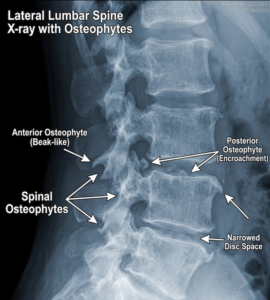
Figure 1.2. Spinal osteophytes
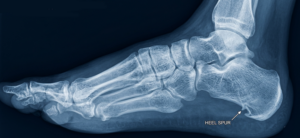
Figure 1.3. Calcaneal heel spur
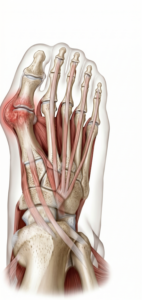
Figure 1.4. Bunion
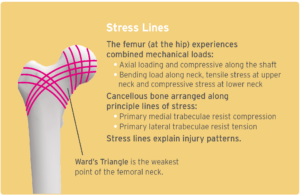
Figure 1.5. Anatomy: Stress lines
The Mechanostat Model
The Mechanostat Theorem, developed by American orthopedist and surgeon Harold Frost, is essentially an enhancement of Wolff’s Law. It describes how bone adapts to mechanical stress, and thus also the relationship between muscle and bone.
According to the Mechanostat model, bone growth and bone loss are stimulated by the local mechanical elastic deformation of bone. The peak forces of muscles exerted onto bones, which are measurable by mechanography, cause their elastic deformation. The adaptation of bone, a type of feedback control loop, is considered a lifelong, dynamic process. Bone adapts its mechanical properties according to the required mechanical function – bone mass, bone geometry, and strength, the latter of which may be quantified by Stress-Strain Index (SSI) – and adapts according to everyday usage and demands.
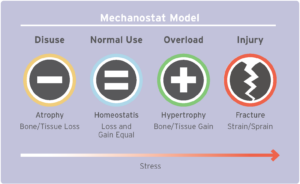
Figure 1.6. The Mechanostat model.
Thanks to this control loop, in a healthy body, there is a direct relationship between muscle cross-sectional area (as an approximation of the typical maximum force the muscle can produce under physiological conditions) and the cross-sectional area of the bone (as an approximation of bone strength) associated with that muscle. This relationship is of great importance, especially regarding the loss of bone seen in conditions such as osteoporosis.
Through appropriate adaptive training, using the required threshold forces applied to the affected bones, new bone growth may be stimulated, and bone loss may be minimized or prevented. Examples of this training are trampolining and rebounding, which are so effective at stimulating bone growth, strength, and density that the National Aeronautics and Space Administration (NASA) has used bands and band harnesses with astronauts in orbit to simulate trampolining, thus opposing bone loss while in a gravity-free environment.
Davis’s Law
Davis’s Law is a corollary of Wolff’s Law that pertains to soft tissue and is commonly cited in the fields of anatomy and physiology. It is named after the American orthopedic surgeon Henry Gassett Davis (1807-1896), who also researched traction methods. It describes how soft tissue and, principally, tissue containing collagen fibers (e.g., ligaments, tendons, and fascia) will model via imposed demands similar to the way in which Wolff’s Law describes the same phenomenon for bone.
It is used, in part, to describe muscle-length relationships and helps to predict the effects of rehabilitation and postural distortion treatments in which muscle length is of concern.
Davis’s Law also applies to muscle tissue and explains how a muscle will lengthen or shorten in response to stretch or load, respectively. Since most major muscles oppose the function of another major muscle (within an agonist – antagonist pairing) they, along with their synergistic and associated muscle groups, tend to reciprocate each other’s length. For example, a strong yet inflexible Gastroc-soleus (calf) complex will often result in a weak and highly flexible tibialis anterior (shin) muscle, and, possibly, vice versa as well.
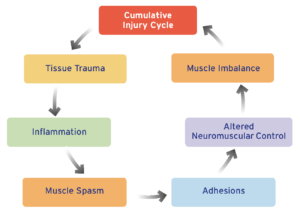
Figure 1.7. Cumulative injury cycle. The cycle follows a path of inflammation, muscle spasm, and the development of soft tissue adhesions that can lead to altered neuromuscular control and muscle imbalance.
Tendons are soft tissue structures that respond to changes in mechanical loading. Bulk mechanical properties such as modulus, failure strain, and ultimate tensile strength, decrease over long periods of disuse as a result of micro-structural changes on the collagen fiber level. In micro-gravity simulations, huma n test subjects can experience gastrocnemius tendon strength loss of up to 58% over a 90- day period. Test subjects who were allowed to engage in resistance training displayed a smaller magnitude of tendon strength loss in the same micro-gravity environment but modulus strength decrease was still significant. (Reeves; J Applied Physiology; Jun 2005; 2278) “Influence of 90 day simulated micro gravity on human tendon mechanical properties and the effect of resistance countermeasures.”
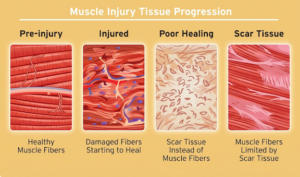
Figure 1.8. Muscle injury tissue progression.
Conversely, tendons that have lost their original strength due to extended periods of inactivity can regain most of their mechanical properties through gradual reloading of the tendon, due to the tendon’s response to mechanical loading. Biological signaling events initiate re-growth at the site, while mechanical stimuli further promote rebuilding. This 6 – 8-week process results in an increase of the tendon’s mechanical properties until it recovers its original strength.
However, excessive loading during the recovery process may lead to material failure, i.e. partial tears or complete rupture. Additionally, studies show that tendons have a maximum modulus of approximately 800 Mpa; thus, any additional loading will not result in a significant increase in modulus strength. (Wren; Clinical Biomechanics; 2001; 16(3); 245) “Mechanical Properties of the Human Achilles Tendon.”
These results may change current physical therapy practices, since aggressive training of the tendon does not strengthen the structure beyond its baseline mechanical properties; therefore, patients will still be susceptible to tendon overuse and injuries.
Physiology
(For more detailed coverage of this topic, refer to The Future of Foot Care Monograph, pages 18-20.)
In essence, human gait is simply another physiological system that must have three essential components: input, central processing, and output. Figure 1.9 illustrates these components as a feedback control loop.
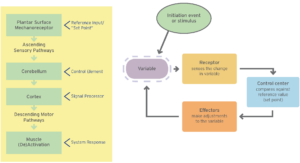
Figure 1.9. Human gait, shown as a feedback control loop.
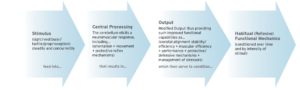
Figure 1.10. The sensory motor components of human gait.
Optimal Mechanics
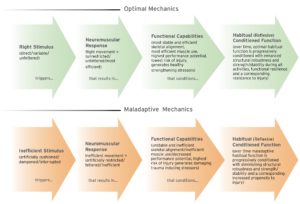
Figure 1.11. Factors that affect optimal mechanics and maladaptive mechanics.
Achieving optimal mechanics and the means for achieving optimal mechanics and optimal restorative and repair processes for maladaptive mechanics seem almost impossibly simple – simply demand that the neuromuscular and skeletal systems do their jobs. As the age-old adages say, “Use it, or lose it!” and “Garbage in, garbage out.”
Neuromusculoskeletal Adaptation
The neuromuscular and skeletal systems of the huma n body continually adapt in response to the way we use our bodies. The ways in which we regularly employ our bodies and the environments that we use them in, determines our overall functional capability.
For example, challenging the body with regular exercise causes it to adapt by strengthening and becoming more capable. Conversely, the body also adapts to a lack of exercise by weakening and becoming less capable.
Integral to our body’s functional capabilities are the neural networks that first collect sensory information through touch, pressure, pain, and spatial positioning before sending signals to trigger muscle activations. These neural networks also adapt to challenges imposed by, or the relative lack of sensory information from, usage and environmental influences.
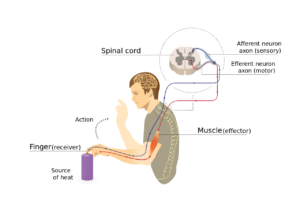
Figure 1.12. The reflex arc demonstrated. (Illustration by Marta Aguayo, used under License CC BY-SA 3.0)
Proprioception and Reflexes
The coordination of our limbs, and all body movements is determined by proprioceptive sense (“proprioception”). Every movement the body makes requires the intimate, full engagement of the neuromuscular and skeletal systems in an integrated and harmonized fashion.
Neuromuscular function
The neuromuscular system is responsible for muscle activations that control the movement of the body. The body’s muscular reflex actions, such as its innate protective reflexes and conditioned reflexes, involve proprioception, which is the body’s ability to sense the relative speed and position of its neighboring parts. Proprioceptive movements can either be conscious or unconscious (reflexive).
With sufficient regular repetition or training, conscious proprioceptive movements gradually become unconscious. In this regard, the phrase “use it or lose it” is often applied to the maintenance of optimal neuromuscular functional capabilities.
Conditioned responses
Proprioceptive abilities are adaptive; regular use and environment hone their functional capabilities. Examples of this are learning to write, walk, swing a club, catch a ball, or drive a car. Initial conscious focus on the activity gives way to unconscious and reflexive movement through repetition.
Similarly, the body’s protective reflex responses are conditioned through use. Protective reflexes can be triggered by a variety of sensory stimuli, such as touch, vision, and fearful anticipation (psychological). Brush your hand too close to a flame and it will reflexively pull away. Trip and fall and, before you can think, your hands will reflexively reach out to protect you from impact.
However, when an experienced driver in the passenger seat of a car reacts to perceived danger by reflexively pressing a nonexistent brake pedal, that is consciously trained protective reflex in action. By repeatedly practicing a new response with sufficient intensity and duration, you can modify a reflexive proprioceptive movement or reaction to an alternative adaptation.
Environmental influences
Environmental influences significantly affect proprioceptive and protective reflex functional capabilities. For example, if an avid writer’s hand and wrist are put in a cast, the functional capability of that area will quickly adapt to the restriction and lack of stimulation by losing much of its “coordination” and strength capability. This lost function, or maladaptation, can be regained by consciously retraining the proprioceptive movements through repetition so the affected area adapts in such a way that the function becomes reflexive again.
Habituation
The definitions of habituation are:
- The gradual adaptation to a stimulus or to the environment.
- The extinction of a conditioned reflex by repetition of the conditioned stimulus (Dorland’s Medical Dictionary). We can infer that this indicates that the nervous system has a built-in means of adapting to and ultimately ignoring unimportant and/or unchanging sensory input.
When considering huma n gait, optimal neuromuscular function and skeletal alignment are reliant upon a continuous source of disparate information; otherwise, the central processor will habituate and ignore a flow of unchanging sensory input. This habituation thus diminishes, or even eliminates, the appropriate motor output necessary for optimal neuromuscular gait mechanics. This is critical to appreciating the variable stimulus capacity of Biopods / Barefoot Science technologies and the inadequacy of current custom, contoured, and cushioned insoles.
“Sweet spot” function and healthy adaptation
Everyone has a “sweet spot” for optimal musculoskeletal function – the point at which stressors actually enhance the capabilities of the body. This is known as healthy stress. Each individual’s “sweet spot function” is encouraged and enhanced by activities that promote a balance of strength and flexibility in opposing muscle groups at the joints.
Daily activities or movements that encourage sweet spot function lead to optimal proprioceptive conditioning by safely increasing the functional robustness of the musculoskeletal structure and reducing the risk of injury and degenerative stress. In the world of athletics, this is also known as training with Proper Technique.
Even those with severe genetic deformities or those who have suffered irreversible debilitating trauma, joint fusion, or similar ailments, will have an optimal functional sweet spot, though these capabilities may be limited.
Even those with severe genetic deformities or those who have suffered irreversible debilitating trauma, joint fusion, or similar ailments, will have an optimal functional sweet spot, though these capabilities may be limited.
Maladaptation and Degenerative Stresses
The body will maladapt when it is unable to safely manage stressors that exceed its conditioned functional capabilities. Maladaptation, in the form of atrophy and/or weakening, can develop in response to a lack of stressors.
Most individuals, regardless of genetic predisposition, exhibit maladapted proprioceptive and reflex functions in proportion to their daily activities and environment.
In a sports training context, Poor Technique conditions a less-than-optimal version of musculoskeletal function, promotes maladaptation, encourages degenerative stress, increases injury risk, and hampers performance capabilities. In this situation, stressors created during functional use exceed the sweet spot by pushing structural function beyond safe or healthy tolerances. The resultant degenerative stresses can cause, exacerbate, or otherwise contribute to systematic breakdowns and disease.
Engaging in daily Poor Technique activities causes maladaptive changes as the body attempts to compensate for the degenerative stressors as well as proprioceptive and mechanical inefficiencies. In addition to possible joint and muscle stiffness and pain, this leads to more pronounced and local/global imbalances in:
- strength
- flexibility
- mobility
- endurance
- coordination
- balance
- kinesthetic
Often, maladaptive proprioceptive and mechanical functions remain reflexive long after the actual stressors have ceased or been retrained away.
Some soft tissue and bone tissue damage will present obvious symptoms, while some fibrosis and scar tissue may be symptom- free. The inelastic nature of fibrotic or scar tissue further contributes to maladaptive function.
Aside from severe genetic deformities and acute trauma, most foot, leg, hip, and back problems and pain are caused by functional maladaptation that has become reflexive. These conditioned reflexive inefficiencies impair the body’s ability to safely manage increased activity.
Therapeutic programs that incorporate Proper Technique are the most effective means to safely retrain the reflexive maladapted function in the feet, legs, hips, and back. By employing repetitive Proper Technique activities, the body’s proprioceptive and reflex systems readapt so that healthier optimal function becomes reflexive.
Kinetic Chain and Biomechanics
A kinetic chain (sometimes referred to as a kinematic chain) can be defined as a “combination of several successively arranged joints constituting a complex motor unit” (Steindler). This functional concept is useful in the study of huma n movement, because it directly implies that movement (or alignment) at one joint produces, or affects, movement (or alignment) at another joint within that kinetic chain (Reuleux). In particular, the posterior fascial line, which extends from the bottom of each foot to the top of the head (Wolf), is a series of contiguous myofascial slings, nicknamed the powerhouse of movement, and directly implies that a disturbance of movement (or alignment) at the feet results in a disturbance of movement (or alignment) throughout the rest of the line. Of particular interest, within this line, is the stirrup-like effect created by the contiguous insertion points of the tibialis anterior and the peroneus longus (a.k.a. fibularis longus) muscles, on the 1st metatarsal. (See Figures 1.13 and 1.14.)
Their functional balance largely determines the alignment and stability of the foot in both a biomechanical sense and within the kinetic chain concept.
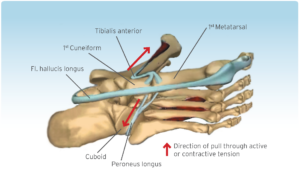
Figure 1.13. Left foot/plantar surface. Active or contractive tension on peroneus longus (aka fibularis longus) creates a pulley effect around the cuboid, as the opposing tension created about the first cuneiform and first metatarsal cinches the midfoot and raises the cuboid.
Further, there are basic classifications of kinetic chain:
- Closed kinetic chain – functional movement performed during which the foot (regarding leg motion) is fixed in space and cannot move; thus, the extremity remains in constant contact with the immobile surface.
- Open kinetic chain – functional movement performed during which the foot (regarding leg motion) is free to move.
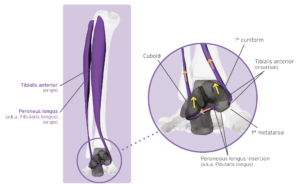
Figure 1.14. The Cuboid Pulley Mechanism: midfoot and ankle stabilization
Based upon these definitions, the lower limb, during huma n gait, continuously cycles through episodes of closed kinetic chain (i.e., stance phase) and of open kinetic chain (i.e., swing phase) activity. The body’s challenge is to attain a close-packed condition (i.e., skeletal alignment in which articular surfaces are in maximum congruency state for those joints, resulting in the optimal mechanical stability, which by necessity implies that all the ligaments and capsules involved are optimally taut) for the foot and entire lower limb, as it transitions from swing phase to stance phase. This is where “the rubber meets the road” and is the focal point of our discussion.
Lesson 1 Quiz
Select all answers that apply. A score of 70% or higher is required to pass.
No email is required to take the quizzes. After passing all four lessons in this browser, you can request an emailed certificate of completion.
Request Certificate of Completion
Enter your details exactly as you would like them used for the certificate email.
Please confirm the certificate name before submitting. The emailed certificate will use this text.
Continue to Lesson 2